The Frog Pond #32: Unlocking the Printer's Key + My Book Comes Out This Month???
What are those lines of numbers on the copyright page of books? I take a deep dive into the history and modern styles, for science.

Some nice book updates:
- A FATE WORSE THAN DROWNING was selected as a Most Anticipated Canadian Book by Indigo! They've got a 30% off pre-orders sale going until July 5, a good deal for new books! I made an Instagram post featuring some other books in the sale that I think sound rad.
- A FATE WORSE THAN DROWNING was chosen by Ampersand (my Canadian distributor's sales agency) as their monthly pick to donate all sales commissions! I got to choose the charity, and I'm so honoured to share that it's the Rainbow Refugee Association of Nova Scotia (RRANS), a non-profit focused on helping queer refugees and their families come to and thrive in Nova Scotia!
- I got my author copies!!! This is my first time seeing the final version of my book in real life instead of PDFs! I made a fun unboxing video over on Instagram.
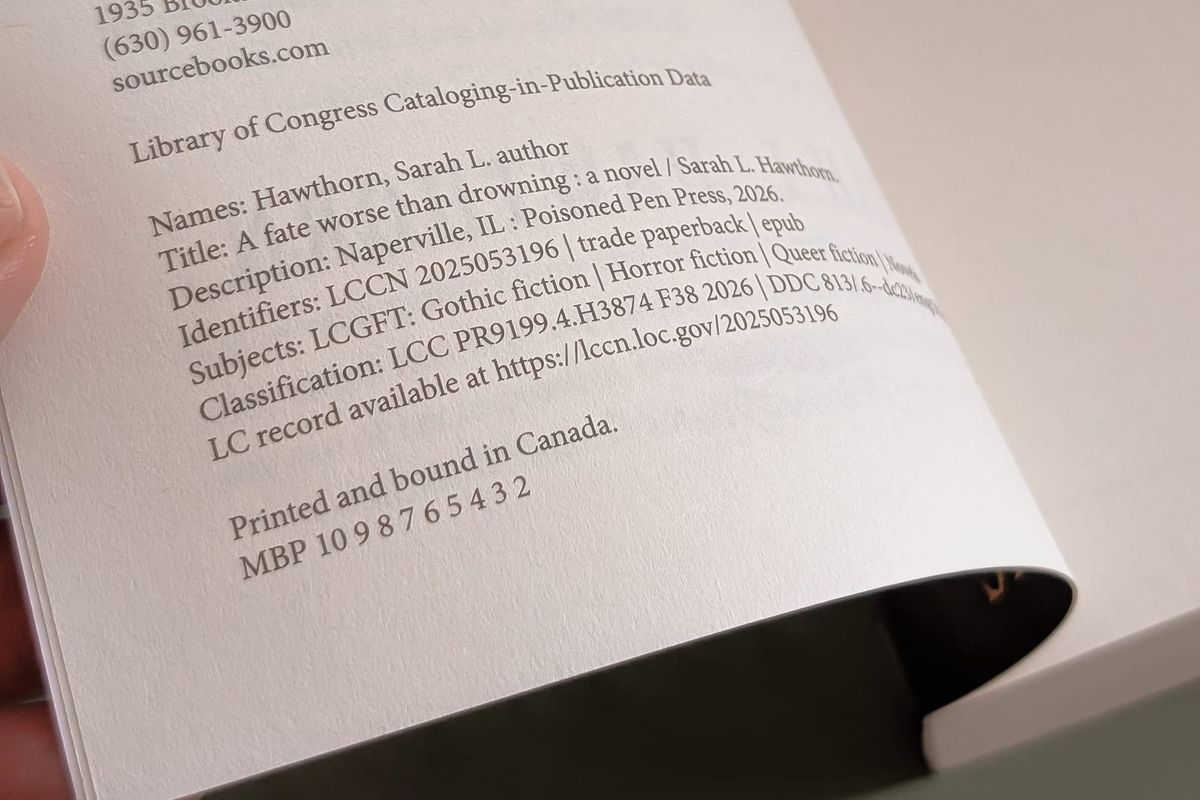
- I also learned that A FATE WORSE THAN DROWNING has had a second print run! When a book does better than initially calculated during acquisition (reflected in the amount the author gets as an advance), the publisher may decide to print the first edition again. It's the same as the first print run, so it isn't a second edition, but they make a change to the front matter page to show which printing it is. This is very exciting! It means my book is doing better than expected, which we love to see.
If you're in the Halifax area and want to come hang out/get a signed copy, check out the release week events on my website!
Speaking of print runs...
What is that line of numbers at the bottom of the first page of a book?
Before the title page, any books you'll pick up today at the bookstore will have a printer's key, also known as the number line. This will be a line of numbers, usually at/near the bottom of the same page that has the copyright information (called the copyright page or the front matter page). Sometimes they are in ascending order, sometimes descending, and sometimes in other patterns! It's not standardized and depends on the publisher or imprint1.
I often read the front matter pages of books as a kid (I was a very cool and interesting child) to read the genres and font type listed, and I was often confused by these printer's keys. I figured they were linked with editions or something like that, but never knew there was a particular way to read them.
The date of publication was often found on the title page in the 1800s, but the trend changed in the 1900s not to have the date there1. Printer's keys became standard around 19701. Some publishers, such as Random House, will state "first printing" on the copyright page, but this is rarer now.
The easy version: Ascending and descending printer's keys
The easiest printer's keys to read are simple: A list of numbers, either going up or going down, following an easy pattern. For example:
10 9 8 7 6 5 4
This printer's key shows that this particular book would be the 4th printing, because it ends at 4. This comes from the longer history of printing. It's easier to take away a number in a row from a printing plate, so removing numbers every time a new print run was required was preferred2.
The same could occur in ascending order:
4 5 6 7 8 9 10
This still indicates that this book is from the 4th print run. You're always looking for the smallest number.
Centred version: Even vs. odd
Sometimes the numbers are ordered in even and odd number order:
2 4 6 8 10 9 7 5 3 1
This sequence shows a first print, because the lowest number shown is 1. The reason this sequence may be preferable might be surprising: keeping the lowest numbers on each side helps ensure the string of numbers stays centred, as each subsequent printing will take a number off from the opposite side as the last3.
Slightly harder version: Letters?
Some publishing houses use letters instead of numbers:
A B C D E F G
This line indicates a first printing, because it includes A. The next printing would start with B instead. There can be quirks to this, like "First Edition" replacing the A, but generally this is a less popular format1.
Quirky version: Numbers and letters together
You may rarely see a quirky version when the customary first 10 numbers have been surpassed and a book wants to show an 11th printing4:
0 2 4 6 8 A 9 7 5 3 1
The presence of the A shows a "new" number line inside of the original line. An A is added to the middle, representing the next 10 printings. So this would mean A + whichever is the lowest number, which is 1, therefore this means the 11th printing. If the print run reached 21, A would be swapped out with B. This particular system can be very confusing and lead to 11th printings4. (There's a 0 in the sequence, which is smaller than 1, but you can't have a zero-th printing, so I guess 1 is the smallest number we care about? Why add the 0 at all? I don't know.)
A complicating factor: Year
Sometimes the printer's key not only indicates the print run, but the year that book was published–all on the same line! It might read as:
2 3 4 5 6 84 83 82 81
This sequence indicates that the book is in its second printing, and it was printed in 1981. It does not mean, unfortunately, that this fictional book is in its 81st printing! Sometimes there will be an acronym for the printing company in between the two number sets to help distinguish them5.
What do print runs mean for book success?
An important thing to note about print runs: There's no standard amount. When a book is first acquired by a publisher, there's a lot of math and probably magic that happens behind the scenes to figure out how many books they think they can sell. That number informs two big things: The number of books in the first print run, and the author's advance. Often the amount of books printed will more or less coincide with the amount it would take for the author to "earn out" their advance.
Quick refresher on advances: An advance is the amount of money an author gets in a lump sum, before the book is published (though often cut into multiple smaller lump sums). This advance is a guess by the publisher that represents the royalty amount they think the author can reach. They hope for more! But plan for less. They give this amount up front, and won't pay the author more until that royalty amount has been sold. So for example, if an author is given a $100 advance, their book is sold for $10, and they receive 10% of the book sales as a royalty, that means they need 100 books to be sold before they'll start getting additional royalties, because that initial $100 has been "earned out". Most books do not earn out.
So one book's first print run could be 1,000 copies, another 10,000, another 100,000! Their next print run could be the same amount, or more/less depending on the demand the publisher receives. Without knowing the inside baseball of a book, there's no way to know based on just the printer's key. But, relatively speaking, it is a good thing to have a second print run because it means the book has overperformed compared to the publisher's initial investment. The publisher makes more money, the author gets royalties (!!), and more readers get copies! Everything is in relation to the acquisition numbers.
That's one reason why comparing your book to another author's book numbers isn't helpful, outside of just keeping yourself sane–it's simply unhelpful!
(This should also go without saying but: the printer's key is only relevant to the book you are holding. Ebooks don't have printer's keys because they are not printed, though they may note the edition if there have been changes/revisions/additional content. You can't know how many print runs a book has had since the publishing of that particular book, because physical books aren't... updateable that way.)
Statistics are often tricky for publishing given how odd of an industry it is. I'd love to know what percentage of books get a second printing! But those aren't necessarily shared the same way that a book's rights being bought in a new country or translation would. Sometimes the print run is used as a selling point to show how excited the publisher is about the book! There's nothing negative about that not being shared6.
Similarly, there are advantages and disadvantages to small and large advances! A smaller advance is an easier target to earn out (depending on soooo many factors, like genre, age category, topic, time of year of publication, etc.), while a larger advance is great to have locked down and in your pocket, but can be more daunting to earn out/may make you feel like less of a success if you don't. Ultimately you're never guaranteed to get royalties past an advance, and advances tend to reflect the amount of marketing/support your book will receive from your publisher, so there's a reason your literary agent will fight for a bigger advance. You never need to give your advance "back" based on low sales.
Enough shop talk though, back to print runs!
Print Run vs. Edition
Everything above applies to print runs, not editions. A print run is just the collection of books that are printed at the same time. Two print runs will produce the same book edition because nothing has changed about the book (other than that printer's key number!)7. Some small distinctions may be noticeable, like different paper weight or ink colour, if a different printer was chosen between print runs7. Small typo corrections or formatting fixes may happen, but nothing fundamental will change7.
An edition constitutes a major change to the book. This could mean bonus content like an extra chapter or interview with the author, or a different size/dimensions. Something that is obviously different to the original first edition7. Modern editions could also include a book with sprayed edges, a book made for a specific book box, a library edition made to withstand greater wear, etc8.
Mainly people care about first print runs and first editions (the first print run OF the first edition is sometimes called the "first first edition", lol) if they are collecting books. That's where a second print run before the publication date can be a little tricky, because someone who has pre-ordered a book could end up with a second or even third printing, though they'll always get the edition they purchased7.
Test your knowledge!
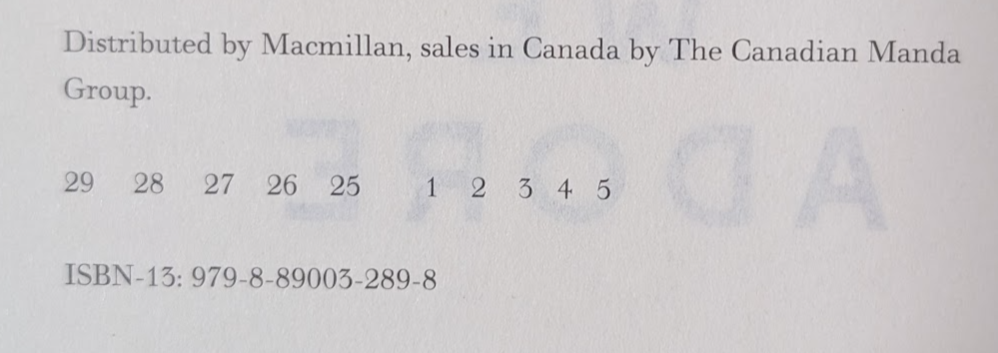
I grabbed a selection of books from my own shelves. Find the answer for each printer's key for the print run (and year if applicable), and check them against footnote #9.
#1: THE FACELESS THING WE ADORE by Hester Steel
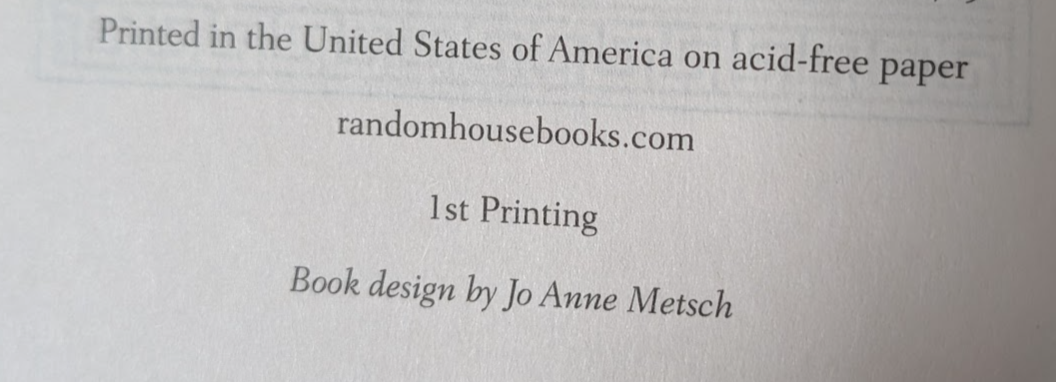
#2: THOSE FATAL FLOWERS by Shannon Ives
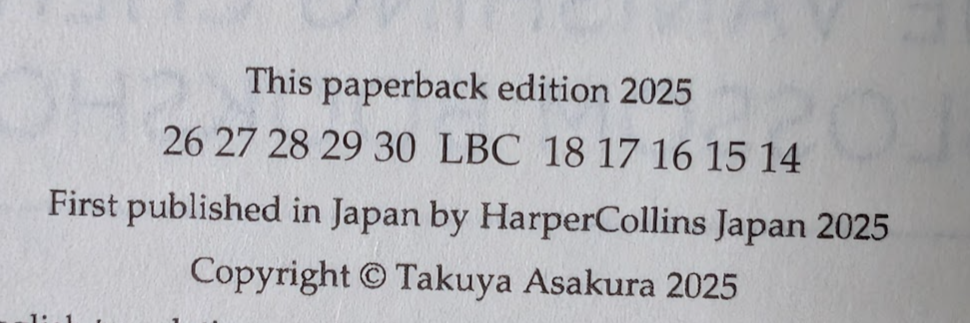
#3: THE VANISHING CHERRY BLOSSOM BOOKSHOP by Takuya Asakura
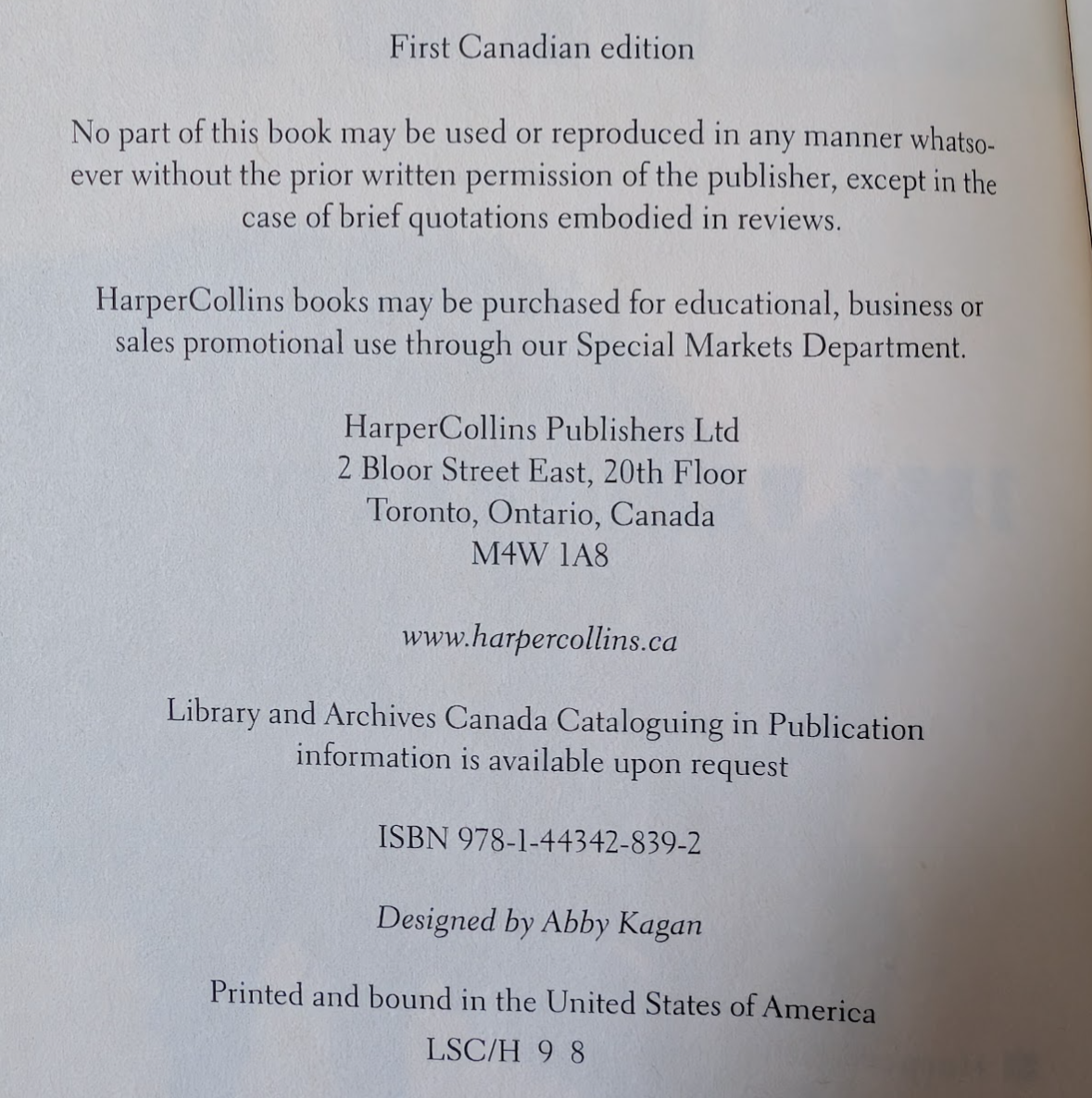
#4: ANNIHILATION by Jeff VanderMeer
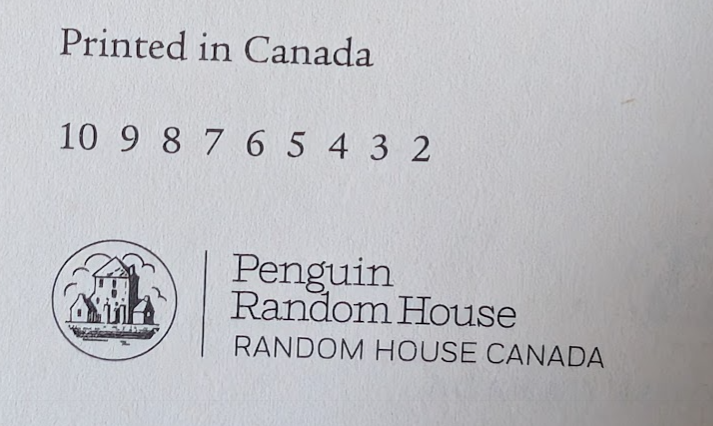
#5: THE CURE FOR DROWNING by Loghan Paylor
Thanks for playing my game! Onto the updates...
A word from a passing frog
The next Frog Pond that comes out will be after my book is officially released. I'll save most of my sappiness for then, but just for my fellow frogs: Thank you for being here. Thank you for reading me weird dives. Thank you for caring about my writing, querying, and publishing my debut novel. This has been my dream for most of my life. At an extended family party when I was 16, I told my grandmother I wanted to be a writer. It was my first time declaring it (but not the last). A decade and a half later, I'm at the precipice of being a published author.
Writing
I asked for an extension on my deadline for my first draft of my second book. A very normal thing, though I'm a little disappointed I didn't get as much done as I'd have liked. Still, health comes first and circumstances are often more flexible than you assume! So I've got until mid-August to finish this draft.
I'm so excited about this book! I've got the voice down now and it's really surprised me! There's more humour in this one, which has been a breath of fresh air to play with. I've been calling it "If THE TRAITORS UK met THE LONDON SEANCE SOCIETY met KNIVES OUT" to give you a general idea.
Reading
I have the privilege of reading some books that aren't out yet, one to betaread and two to blurb! More on these fantastic reads when I'm done with them!
I'm also reading BUFFALO HUNTER HUNTER and DUNGEON CRAWLER CARL. Vastly different tones! I enjoyed Stephen Graham Jones' historical horror from page 1, while Matt Dinniman's phenomenon-creating, sci-fi-fantasy-lit-rpg book took a bit more warming up to. Happy to say I'm a Princess Donut stan through and through.
Looking forward to after my deadline to have a lot more focused reading time!
Links :)
- International pre-orders for AFWTD
- Add AFWTD on Goodreads!
- Pre-order AFWTD on Indigo
- Pre-order on Bookshop.org
- Pre-order AFWTD audiobook on Audible
- For my Halifax friends, I recommend checking out Egghead Books, Trident, and the King's Co-op Bookstore.
Footnotes
1: https://books.google.ca/books?id=oUMxWVOI_goC&lpg=PA57&pg=RA1-PA1991&redir_esc=y#v=onepage&q&f=false
2: https://books.google.ca/books?id=FCeeDwAAQBAJ&redir_esc=y
3: https://thecubicleattheendofthegalaxy.substack.com/p/printings-editions-and-how-to-brag
4: https://www.bookthink.com/0091/91num1.htm
5: https://en.wikipedia.org/wiki/Printer%27s_key
6: https://www.tumblr.com/literaticat/652276299623251968/how-many-books-on-average-are-printed-during-a
7: https://firstsecondbooks.com/featured/first-printing-or-first-edition/
8: https://en.wikipedia.org/wiki/Edition_(book)#Print_run
9: Answers to the game:
- THE FACELESS THING WE ADORE: This is the 1st printing, printed in 2025.
- THOSE FATAL FLOWERS: This is the 1st printing (Random House doesn't always add a number line for first printings).
- THE VANISHING CHERRY BLOSSOM BOOKSHOP: This is the 14th printing of the 2025 paperback edition, printed in 2026. Editions can get a little more confusing when you include international and translation versions!
- ANNIHILATION: This is the first Canadian edition, but it is also the 8th printing.
- THE CURE FOR DROWNING: This is the second printing (there is no "First Printing" listed as Random House may add to theirs, so we know it's truly a second printing).